 EN
EN

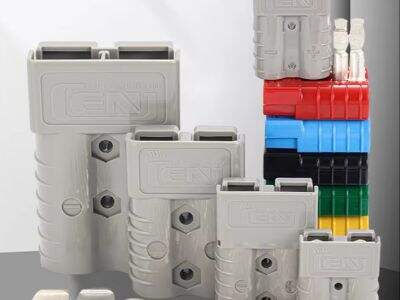
It can be hard to know which type terminal is right for your wiring needs. They come in plenty of choice and each variety has a reason for being. At GEN, we realize the significance of a decision for your project. This article will teach you how to choose the best battery terminal connectors type. We’ll cover what to consider, the options you have and what (if anything) you should know before deciding. By the time it ends, you will be assured of your decision. Let’s dive in.
How to Select Best Type of Terminal for Your Wire job?
The first thing when you begin a wiring project is to ask yourself what you want. Maybe you have a small project to work on, such as repairing a table lamp or huge one like wiring up the entire building? The size, type of your light will also help you determine what type of terminal is best. You could go with something as simple as a screw terminal, for small projects. These are simple to use and don’t require much space. For larger projects, you may need something more complicated such as a barrier cable terminals block. Multiple wires can be contained by this variety and everything stays together.
Second, think about what materials you are using. Various terminals are formed of various materials. Some are made of metal and others are plastic. Metal terminals ensure a strong connection, but they can corrode, particularly in moist environments. To ensure safety, usually the insulation is carried out by means of plastic insulated terminals. Consider where you’re going to run your wiring. Will it be inside or outside? Does it have to be waterproof or withstand high temperatures? This will help you choose the right materials for your terminals.
Also bear in mind the size of wires you are employing. Some terminals are designed for thin-gauge wires while others are intended for thicker ones. Be sure to select a terminal that fits the diameter of your wire. If the terminal is too small, the wire may not be held with enough grip. If the hole is too large, connection may be loose. Fit is the most important aspect to ensure both safety and performance.
Finally, consider how intuitive the terminal is to operate. Some terminals need special tools to attach wires; others can be attached by hand. If you’re a beginner to wiring, consider starting with more straightforward terminals that won’t demand many tools of you. As you become more experienced, you can experiment with more complicated styles.
What to Know?
Keep these basic points about terminals in mind before you start wiring. First, safety is the most important thing. And be sure to use the correct terminal for your project. If you don’t know, ask or look it up. The flip of a wrong switch can cause electrical problems that can be hazardous.
From here, look at the terminal ratings. Every terminal has a rating which indicates the amount of current it can safely carry. This is good because if you connect it to a terminal that isn’t able to handle the current, things can get too hot. Find a type of terminals that have reasonable current ratings for your application.
And also how many connections you’ll have to make. If you have more than 1 wire to connect, Consider using a junction box. It allows you to wire several wires to one point instead of making a bunch of separate connections here and there. This will save you time and your work will look nice and neat.
Don’t forget about the environment your wiring might be traveling through. If it’s going to be in a location that gets very moist or hot, look for terminals designed for those environments. There are terminals adapted for use outdoors or in tough conditions.
Finally, always read the instructions. Specific installation and use instructions may be applicable to each type of terminal. If you follow these instructions and if common sense prevails your project willbe successful and safe. At GEN, we trust these tips are useful in selecting the appropriate terminal type for your wiring job. It is possible to wire up a safe and effective system with the right information and preparation.
When trying to complete those wiring projects it is imperative enough terminal types are available?
There are a number of popular terminal designs that many wholesale customers select for their specific applications. First up we have the screw terminal. This style is ideal in that you can conveniently screw wires on and off. It clamps down on the wire nicely, keeping a good connection. The push-in terminal is another commonly used alternative. This kind you push the wire into a slit and it stays in place, no tools required. This prepares the way and it can save time if you have a lot of wires to connect. Then there's the crimping connectors. These need a special tool that crimps the terminal onto the wire. Crimp terminals are sturdy and reliable, so they are a good option for projects where the connections will be secure. Finally, we’ve got the ring terminal. This terminal has a hole in the end that appears as as ring so you can screw it on to a connection point. “It’s great for connections that need to be super tight. We offer all of these types of terminals here at GEN to suit your requirements. Knowing these can help you decide which is best-suited for your wiring job.
Common mistakes
Picking the wrong terminal type can be a game changer for your project. To steer clear of common pitfalls, first consider the type of wiring you’re doing. Some projects require a terminal that can accommodate lots of current or voltage. Be sure to verify the data on terminal and check your project takes these. Another error is a failure to think about what the environment in which the wiring will be like. If your project is going to be outdoors or in a wet location you need to select terminals that are watertight and/or corrosion resistant. That way, they’ll last longer and do more. And don't forget about the thickness of your wire. Not all wire gauges fit all terminals. Using a terminal too big or too small will result in loose connections or damaged wires. Lastly, be sure to read the instructions or instructionals given by manufacturers. Here at GEN, we are transparent about our terminals and can help you select the right one.
When selecting terminal types for your wiring tasks, consider their durability and how performance will impact their use. First, consider the materials of the terminals. Some terminals are constructed out of metal that does not rust or corrode, such as copper or brass. These materials are excellent for maintaining connection through time. It's also worth thinking about the aesthetics of the terminal. For instance, a terminal with a thicker wire gauge can carry more current and is less likely to break. Secondly, you'll need what the terminal does under various circumstances. Some terminals are more tolerant of extreme temperatures, while others are made for use in damp or wet environments. If your project will be exposed to changing weather, opt for some durable terminals. Look at how simple it is to plug and unplug the wires, too, another point to check. Unless you’ve got the nimble fingers of a child, terminals that are easy to wire up can be a real time-saver on your project. At GEN, we specialize in durable and easy to use terminals. By considering these factors, you can feel confident the type of terminals you select, do what you need in your wiring projects and eliminate those that will perform poorly over time.

